
"bean temperature"
40000 article(s) found

Skills of coffee roasting, dehydration, climbing, temperature, smoke exhaust and gliding
Recently, many brown friends will ask us privately some questions about baking skills, including: when is dehydration? How many degrees does it take to climb? Smoke exhaust problem? What is the taxiing action? I would like to give you a little experience. Hand net hot fan electric heater gas semi-direct fire gas direct fire here is only a brief introduction, please refer to coffee roasting and other related books for details

Coffee roasting knowledge such as dehydration, temperature climbing, smoke exhaust and taxiing
When is dehydration? How many degrees does it take to climb? Smoke exhaust problem? What is the taxiing action? These professional knowledge about coffee roasting must be the skills that many coffee roasters want to know, so here is a little experience for coffee lovers: however, it is only a simple introduction. For details, please refer to coffee roasting and other related books or interested coffee lovers.

What is coffee roasting ROR coffee beans how to control the heating rate
Professional coffee knowledge exchange more coffee bean information please follow coffee workshop (Wechat official account cafe_style) what is the rising rate of coffee roasting (RoR)? There are two main ways to describe how the bean temperature changes during baking: the bean temperature curve and the rising rate. The bean temperature curve is used to determine the actual temperature of beans. It looks a bit like a check mark. However, RoR

How much water does it take to make a single cup of coffee? How many degrees of blisters do you use to make coffee by hand? How much is the black coffee?
Professional coffee knowledge exchange more coffee bean information please follow the coffee workshop (Wechat official account cafe_style) how much water does it take to make individual coffee? How many degrees of blisters do you use to make coffee by hand? Black coffee how much water brew how to brew? Drinking coffee is really just a way of life. When it comes to coffee, always say carefully that you don't understand, even if you drink it, you just drink it casually.

Effect of water temperature on extraction of hand-brewed coffee Why is the water temperature of hand-brewed coffee 93 degrees?
Professional coffee knowledge exchange more coffee bean information please pay attention to the relationship between water temperature and extraction of hand-brewed coffee in coffee workshop (Wechat official account cafe_style): temperature has a great influence on the extraction taste of coffee, bitter and astringent coke is the later flavor, under the same grinding degree, if the coffee is bitter, scorched, astringent, etc., the extraction water temperature can be reduced; on the other hand, if the coffee is washed out

Coffee roasting: dehydration, climbing, temperature, smoke extraction and taxiing skills
Recently, many brown friends will ask us privately some questions about baking skills, including: when is dehydration? How many degrees does it take to climb? Smoke exhaust problem? What is the taxiing action? I would like to give you a little experience. Hand net hot fan electric heater gas semi-direct fire gas direct fire here is only a brief introduction, please refer to coffee roasting and other related books for details

Suggestions on adjusting the water temperature of moderate roasting hand brewing on the relationship between roasting degree and brewing water temperature of hand brewed coffee
Professional coffee knowledge exchange more coffee bean information please follow the coffee workshop (Wechat official account cafe_style) hand-brewed coffee steaming and water filling methods hand-brewed coffee water temperature and powder ratio data if you drink a certain type of coffee, or all the body to a certain type of beans, a certain practice, it feels good, it is enough to drink it. However, in that case, it's really just a casual drink.
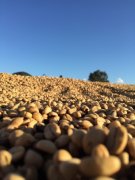
Roasting Technology of Fine Coffee beans Coffee Baking training and Teaching Summary
The principle and process of coffee roasting we must first understand that raw beans are hard seeds in coffee berries, such as water, chlorogenic acid, protein, alkaloids, caffeine, fats, sugars and so on. While baking at high temperature, the above substances will undergo chemical changes such as Mena reaction and Stryker degradation, resulting in coffee tannic acid, nicotinic acid, aromatic esters, alcohols,
Basic chemical reactions that occur during coffee roasting
Many thermal and chemical reactions take place during baking: decarbonation, dehydration of quinic acid, fragmentation, isomerization, polymerization, and complex sugar reactions (caramelization). The main thermally reactive components are monosaccharides and sucrose, chlorogenic acid, displaced amino acids, and trigonelline amide. Both aravinone and calactose in polysaccharides are transferred, and basic sulfurization contains hydroxyamino acids.

Interesting baking curve (1) the problem of bean temperature and temperature recovery point
Professional barista communication please follow the coffee workshop (Wechat official account cafe_style) Rosting Curve this picture is also Karl Schmidt, one of the slide of The Art Science of Roasting, when I saw this baking curve, it immediately aroused a lot of feelings for me, because there are a lot of things to discuss, I like it very much, so here

Yega Chuefei baking temperature time-what is the low temperature baking temperature
1. BLANK ZHOU, Australia: I bake about 1 ton to 1 and a half tons of YIRGECHECHEFFE per month. The baking range is adjusted in 4 seconds, 6 seconds and 8 seconds after the start of the second explosion. Of course, the finished product is mainly for the purpose of single product ESPERSSO. 2. HAPPYBOB: before I choose 2 explosions, it is probably between the last one and the first one, and the end of 40-

The temperature of the water brewed in Chapter 7 of "ESPRESSO COFFEE" is an important element of good coffee.
(Ⅶ) Chapter 7 brewing water temperature-the elements of good coffee water temperature control is good or bad, absolutely affect whether a cup of coffee can preserve the delicious substances in the beans. The better your coffee is made, the more intractable the ultimate problem of water temperature becomes. The water temperature seriously affects the quality of coffee, but it is difficult to control. The temperature of the water is not good, because the temperature of the boiling water in the espresso machine is higher than that of the machine.

[Qianjie Baker's Note] how high does Brazil Red Bourbon need to use to bake coffee beans?
In the baking process, the first step is to add beans, beans are random beans? Of course not. How many degrees to use in the bean temperature is very particular, because it will affect the overall rhythm of the subsequent baking process, as the saying goes: a good beginning is half success. So a suitable input temperature of the bean can determine the direction of the good flavor of the bean. Today, the editor's baker chooses
The basic chemical reaction of coffee roasting process
Many thermal and chemical reactions take place during baking: decarbonation, dehydration of quinic acid, subdivision, isomerization, polymerization, and complex sugar reactions (caramelization). The main components of the thermal reaction are monosaccharides and sucrose, chlorogenic acid, free amino acids, and fenugreek amide. Both aravinose and calactose in the polysaccharides are transferred, and the basic vulcanization contains hydroxylated amino acid.
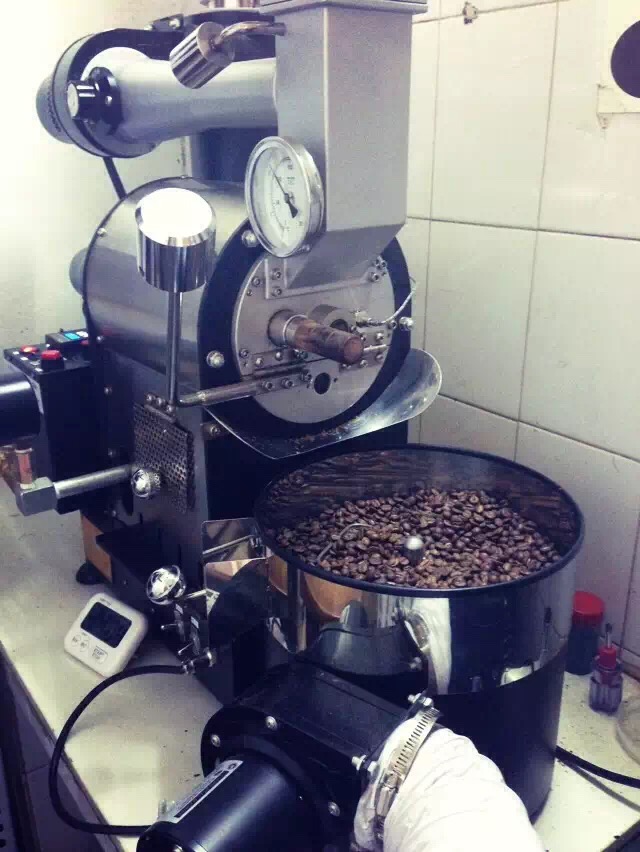
Solutions to the problems of dehydration, temperature climbing, smoke exhaust and gliding in coffee bean roasting
Guide: when is dehydration? How many degrees does it take to climb? Smoke exhaust problem? What is the taxiing action? When is dehydration? How many degrees does it take to climb? Smoke exhaust problem? What is the taxiing action? These professional knowledge of coffee roasting must be the skills that many coffee roasters want to know, so here is a little experience for coffee lovers: however, it is only
The basic chemical reaction that takes place during coffee roasting.
Many thermal and chemical reactions take place during baking: decarbonation, dehydration of quinic acid, subdivision, isomerization, polymerization, and complex sugar reactions (caramelization). The main components of the thermal reaction are monosaccharides and sucrose, chlorogenic acid, free amino acids, and fenugreek amide. Both aravinose and calactose in the polysaccharides are transferred, and the basic vulcanization process includes hydroxylamine.

The basic chemical reactions that take place during coffee roasting
Many thermal and chemical reactions take place during baking: decarbonation, dehydration of quinic acid, subdivision, isomerization, polymerization, and complex sugar reactions (caramelization). The main components of the thermal reaction are monosaccharides and sucrose, chlorogenic acid, free amino acids, and fenugreek amide. Both aravinose and calactose in the polysaccharides are transferred, and the basic vulcanization process includes hydroxylamine.

Coffee knowledge: what are the temperature and humidity requirements for coffee storage?
Professional coffee knowledge exchange more coffee bean information Please pay attention to the coffee workshop (Wechat official account cafe_style) there are four major factors that affect the freshness of coffee beans, namely, light, oxygen, temperature and humidity. Therefore, all the preservation methods mentioned below revolve around these four aspects. Temperature, humidity, oxidation rate, temperature when coffee beans encounter sunlight
The precondition of brewing coffee with warm water
The quality of water temperature control absolutely affects whether a cup of coffee can preserve the delicious substances in the beans. The better your coffee is made, the more intractable the ultimate problem of water temperature becomes. The water temperature seriously affects the quality of coffee, but it is difficult to control. The water temperature is not easy to measure, because the temperature of the espresso machine is higher than 200 ℉, the amount of water is less, and the action of measurement is more or less.

The basic chemical reactions that take place during coffee roasting
Many thermal and chemical reactions take place during baking: decarbonation, dehydration of quinic acid, subdivision, isomerization, polymerization, and complex sugar reactions (caramelization). The main components of the thermal reaction are monosaccharides and sucrose, chlorogenic acid, free amino acids, and fenugreek amide. Both aravinose and calactose in the polysaccharides are transferred, and the basic vulcanization process includes hydroxylamine.